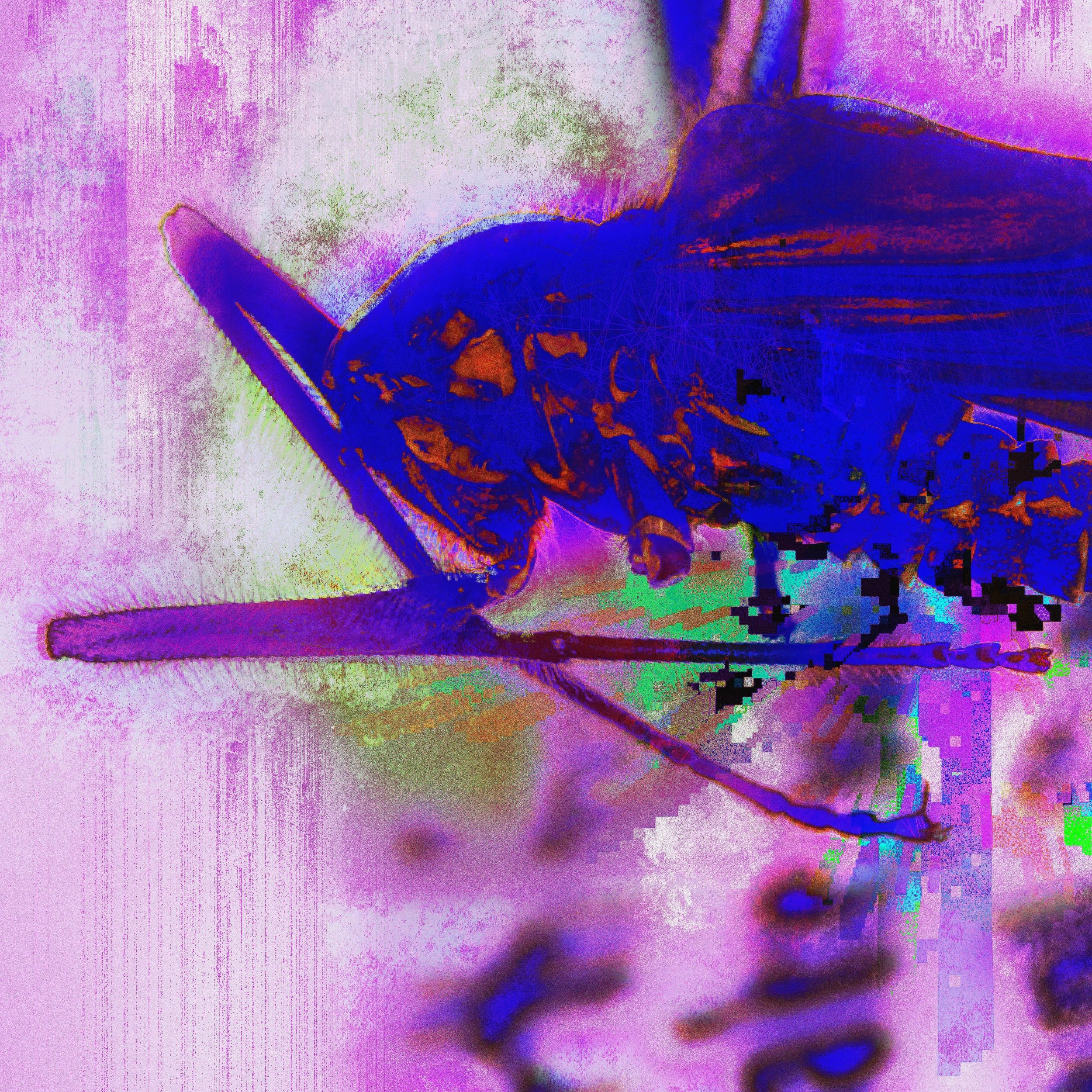
Kintsugi Cricket, Costanza Pernigotti
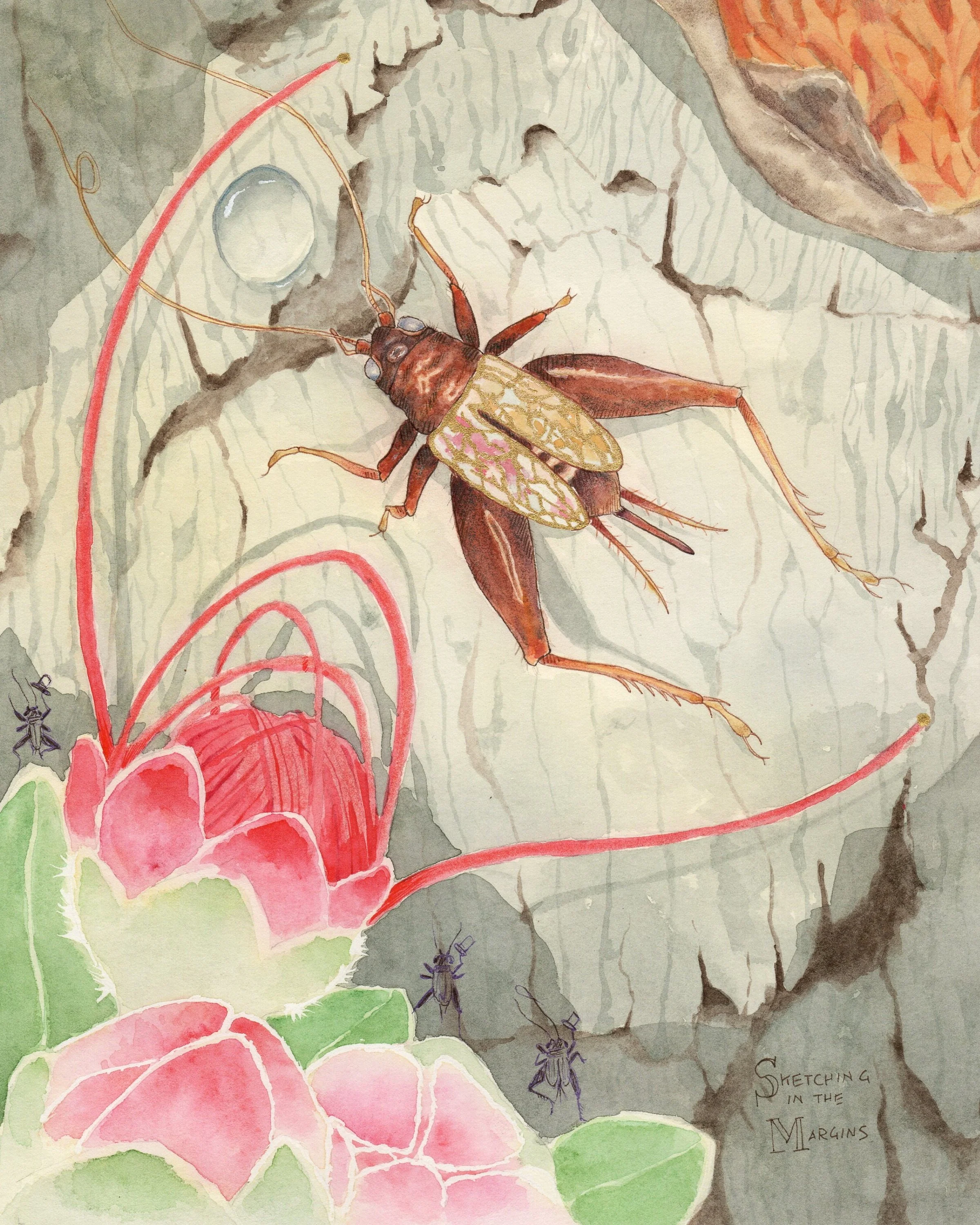
Kintsugi Cricket, Costanza Pernigotti
Mixed media (Watercolor, fineliner pens, colored pencils, mica ink)
Responder updated this value. Costanza Pernigotti, AKA Sketching in the Margins, is an Italian artist, maker, and writer currently living in Hawai‘i. She likes to express herself through illustration, book binding, and block printing. She uses watercolors and alcohol markers to create whimsical pet portraits and capture the understated beauty of urban fauna.
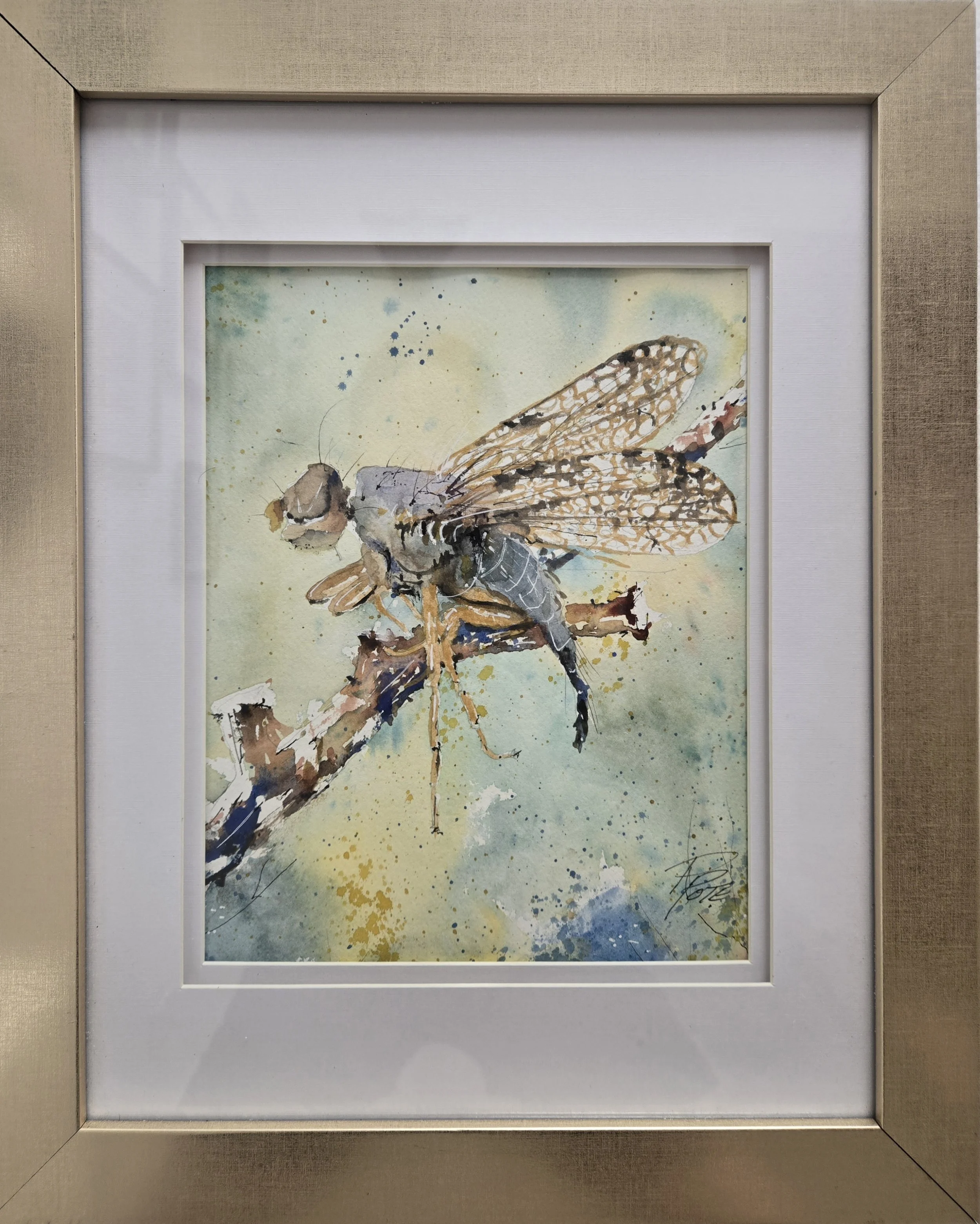
Responder updated this value. When Sandra sent me pictures of Zudella atroferruginea, my attention was grabbed by a specimen whose wings had bright yellow veins, contrasting sharply against its darker body. This pattern reminded me of kintsugi, the Japanese practice of repairing broken pottery with lacquer mixed with powdered gold.
Up close, this little guy may not be the prettiest, with its rather cockroach-like appearance. Still, I absolutely loved studying the way light bounced off its exoskeleton and noticing all its rusty hues (atroferrugineum means dark rust - colored). I decided to depict my Zudella atroferrugineum on an ʻōhiʻa lehua (Metrosideros polymorpha). Unlike other insects, and in typical cricket fashion, Zudella atroferruginea do not have host plants. But it was indeed on Metrosideros that these crickets were observed during a 1925 field trip in Moloka‘i, back when they were still called Paratrigonidia atroferruginea. Even though crickets are mostly active at night, I imagined this Zudella atroferrugineum crawling into a patch of light to reach a drop of water.
In the bottom left corner, a blossom is unfolding its stamens. In the top right corner, a seed pod is approaching the end of its life cycle. In the middle, the golden venation of the Zudella atroferrugineum symbolizes the valuable role this tiny, unassuming creature plays in the wider ecosystem, acting both as food source and as decomposer. Look closely around the blossom, and you will notice playful sketches of three tap dancing crickets (an idea I had while looking at the specimens in person). Fun fact: these sketches are close to the real size of Zudella atroferruginea.